
4 Questions & 4 Insights: Navigating Life as an Introvert with Hearing Loss #4
Exploring the Connection: Key Questions Answered About Introversion and Hearing Loss
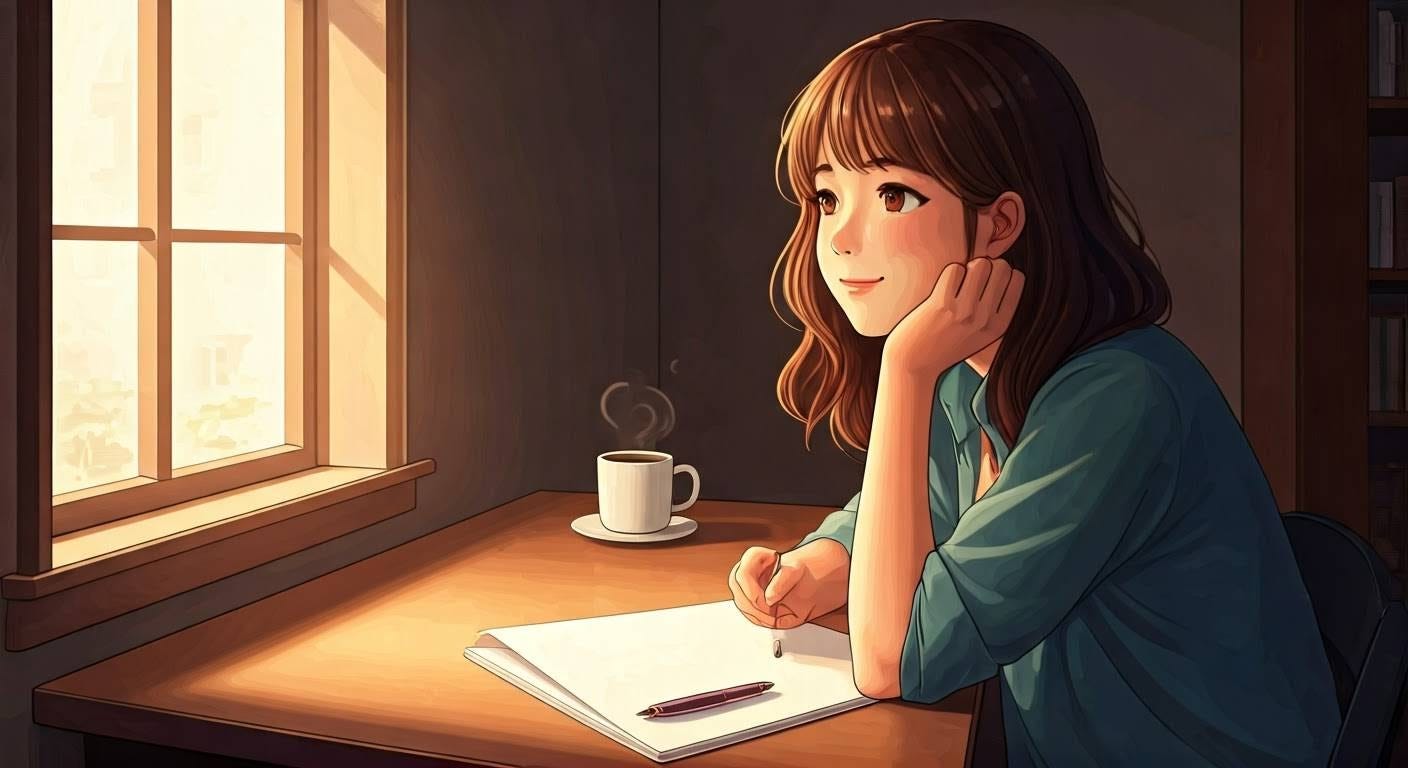
What happens when two invisible traits collide—introversion and hearing loss?
On their own, each one shapes how we move through the world.
Introversion affects how we manage energy in social settings.
Hearing loss affects how we access and engage in those same settings.
Together, they don’t cancel each other out.
They compound.
This reflection begins by exploring each experience on its own—
and then takes a deeper look at what happens when they intertwine.
Before hearing loss enters the picture, what does social life look like for introverts?
1. How Does Being an Introvert Affect How You Handle Social Interactions?
The introvert’s nervous system favours the parasympathetic side, which produces acetylcholine — a chemical that helps you relax and store energy. Introverts also rely more on brain regions involved in empathy, self-reflection, speech and self-talk, planning, long-term memory, and personal experiences. They tend to have more grey matter, too, which supports abstract thought and decision-making. This is why introverts need time to process information, react, express their thoughts, or make decisions.
They’re also more sensitive to dopamine, the feel-good hormone that rewards us when we complete certain actions. For introverts, it takes far less social interaction to reach that emotional reward.
Now that we understand how introverts tick, let’s explore how these traits affect the way they handle social interactions.
1. Battery Not Included
Social interaction requires a lot of mental effort. It activates many brain regions — those responsible for memory, concentration, speech, and processing. You need to follow and understand conversations, catch and remember names, and still behave appropriately.
This comes naturally to extroverts, but it’s exhausting for introverts, who rely on different parts of the brain not optimised for rapid social exchange.
Their dopamine sensitivity also means they reach a sense of contentment faster. After that, socialising becomes draining — causing fatigue, brain fog, stress, and irritability.
That’s why introverts are selective about when and how they socialise. Once their energy is gone, they simply disengage.
2. Loud World, Static System
Introverts are highly sensitive to sensory input. Loud music, flashing lights, constant movement — all of it can feel overwhelming. Because this input travels through multiple brain regions, it takes a lot of energy to process. That’s why introverts often prefer quieter environments and smaller groups.
Many are also emotionally sensitive. Constantly tuning into their own emotions — and those of others — can feel like stepping into someone else’s shoes and living their pain.
This deep empathy is a strength, but it comes at a cost. The emotional weight becomes too much after a while, and they need time alone to recover and process it all.
3. Skip the Fluff
Introverts thrive on meaningful conversation and connection. They don’t see the point of small talk. They’d rather dive into a topic, dissect it, and debate it with someone who disagrees.
Idle chat about the weather or fashion feels like a waste of energy. In those situations, many introverts withdraw and simply observe.
That said, you’ll find them eagerly participating in book clubs, chess competitions, debates, or creative projects. They may even join Toastmasters — not because they like attention, but because when they’re passionate and well-prepared, they make excellent public speakers.
Their motto: Less Talk. More Action!
But try dragging them to loud parties, sports events, or concerts with too much noise and no space for thoughtful discussion. Good luck.
4. Brains Before Banter
Unlike extroverts, who rely on short-term memory for fast replies, introverts access their long-term memory. That takes time. Before they can answer, they need to fully understand the question, recall relevant information, and then craft a thoughtful response.
This is why they need meeting agendas in advance. It gives them a chance to prepare, analyse the topic, and contribute meaningfully.
Even in everyday conversations, an unexpected personal question can catch them off guard. If they do answer, it may not come out well, which leaves them feeling awkward or foolish.
But give them time to reflect. That’s when the magic happens. Their responses will surprise you with their depth, clarity, and insight.
2. How Does Hearing Loss Impact Social Confidence and Participation?
Communication is the bridge to connection, and hearing loss quietly chips away at that bridge every day.
When we look at the impact of hearing loss on social confidence and participation, we need to broaden our perspective beyond general socialising to include telephone and video calls. Every social and listening situation poses unique challenges. You may feel confident in one setting, only to find yourself excluded or uncertain in another.
Certain factors — like your type, degree, and severity of hearing loss, as well as your speech comprehension — shape how you experience each situation.
Types of Hearing Loss
Conductive hearing loss dampens sound. Soft sounds are harder to hear, and loud sounds often seem muted or muffled.
Sensorineural hearing loss affects both the clarity and volume of sounds. It’s classified as mild, moderate, severe, or profound. The more severe it is, the harder it becomes to follow speech. Someone with mild hearing loss might follow conversations easily, even with some background noise. But for those with moderate to profound loss, speech becomes increasingly difficult to process, especially in busy or unfamiliar environments.
Configuration and Onset of Hearing Loss
Your hearing test results are plotted on an audiogram, showing the softest volume at which you can hear different pitches (frequencies).
People with high-frequency hearing loss may struggle to hear women’s voices or birds chirping.
People with low-frequency hearing loss may find it hard to hear men’s voices or the bass sounds in music.
Hearing loss can also vary by ear:
It can be bilateral (both ears) or unilateral (one ear).
It may be symmetrical (similar in both ears) or asymmetrical (different patterns or severity in each ear).
These differences affect how you localise sound, knowing where a voice is coming from in a room. That can make social situations confusing. You may not respond when someone speaks from your weaker side, or you might turn too late to catch what was said.
I have bilateral sensorineural hearing loss and struggle with localisation. I’ve lost count of the times I’ve called my husband at home and he simply replies, “I’m here.” That response leaves me irritated and frustrated because I still don’t know where “here” is. Without the ability to determine the direction of sound, I’m left scanning the house, trying to follow a voice that could be anywhere.
Hearing loss can also differ in how and when it begins:
Progressive hearing loss develops slowly, so you often adapt without realising how much you’re missing. By the time you become aware, social participation may already feel draining or confusing, and others might not understand why you’ve withdrawn.
Sudden hearing loss is more jarring. It can disrupt your confidence overnight, especially if you haven’t had time to learn coping strategies. Social interactions may feel overwhelming because your hearing no longer matches your expectations or previous experiences. You might suddenly rely more on lipreading, visual cues, or asking others to repeat — all of which can feel awkward if you're not used to it.
How Everyday Situations Affect Confidence
Clarity
If someone speaks softly, mumbles, or obscures their lips — whether with a hand, a beard, or just poor lighting — your comprehension drops. You’re less confident in your ability to follow the conversation and may avoid engaging altogether.
Background Noise
Noise poses a major challenge. It takes far more effort to hear words and sentences clearly, and in low-light conditions, you can’t rely on lipreading to fill the gaps.
Lack of Visual Cues
Telephone conversations are particularly difficult. Without any visual support, you rely solely on sound. I avoid phoning call centres at all costs — first comes the struggle to pick the correct option, then the stress of hearing the consultant. The fact that you don’t always know what to expect makes it worse. Just this morning, I couldn’t for the life of me figure out what sabab was. The consultant had a good laugh when I finally realised she was saying suburb. It was funny in hindsight, but I made sure she knew how hard these calls are for someone with hearing loss.
Even though video calls offer visual cues, the problems aren’t solved. People still speak too softly or don’t enunciate clearly. Increasing the volume doesn’t help — it often just distorts the sound. Captioning, when available, is often inaccurate.
Volume Sensitivity
We all love music, but for some of us, the volume at musical events is a barrier. It’s difficult to follow conversations, and the volume itself can be physically painful for noise-sensitive ears.
Lack of Preparation or Structure
Meetings pose a different challenge. Without written information before or during the meeting, it’s hard to keep up. Topics and speakers change quickly, and we’re left behind — unable to contribute, even when we have something valuable to say.
Pitch and Prayer
Depending on your hearing loss, certain voices are harder to follow. For me, women’s voices are particularly challenging, especially in cell group meetings. During prayer, although I find it disrespectful to open my eyes, I don’t have a choice — lipreading is the only way I can follow what’s being said.
Names and Memory
One of the most frustrating challenges is not catching people’s names. You may be too embarrassed to keep asking, especially if it’s someone important like your boss or a senior colleague. This creates anxiety and self-consciousness in every future interaction.
Interruptions and Timing
We also risk interrupting people unintentionally. Because we’re not always sure when someone has finished speaking, we misjudge the timing. That moment of embarrassment — or being called rude — is enough to make you retreat and stay quiet the next time.
Missed Jokes and Conversations Moving On
Then there are the jokes. We often miss the punchline. Even if someone repeats it, the timing is gone, and the group has moved on. You’re left smiling alone while feeling left behind. And once you’ve missed one thing, it becomes harder to catch the next. You lose the thread of the conversation entirely. It’s a constant loop of confusion and catch-up — always a few seconds too late to belong.
I’ve learned to navigate life with hearing loss—school, work, even construction sites—without special accommodations. But one experience shook that confidence completely.
During COVID, I had to renew my driver’s licence at a busy, understaffed centre. The staff wore masks, spoke unclearly, and were visibly irritated when I asked them to repeat instructions. There were no visual cues, no guidance—just noise, chaos, and confusion. Without my husband to help, I wouldn’t have made it through. I felt helpless, ashamed, and completely lost.
That day, I didn’t just struggle to hear—I withdrew, emotionally and mentally. And that’s what hearing loss can do in public spaces. It doesn’t just make things harder; it makes you hesitate, hold back, or even disappear.
3. Why Do Introverts Sometimes Feel Misunderstood?
Introverts are chameleons, fading seamlessly into the background.
Masking. Conforming. Surviving.
Heard Less, Not Worth Less
I remember my dad quietly sipping his coffee. His gaze absorbed the action in the room, missing nothing. But when he spoke, his words showed insight, wisdom, and authority.
Introverts are like spies. They subtly blend into the background. They notice everything. Hear every word. Analyse every fleeting expression.
The introvert brain runs quiet calculations—sifting signals, spotting patterns, and connecting ideas before a single word is spoken.
Careful observation. Surprising insights. Reading the room.
That is what you get from introverts.
Fast responses. Loud voices. High energy
It is why introverts feel out of sync with the world.
Broken Pieces, Golden Joints
‘Don’t be so sensitive.’ The words landed like a punch in the gut. A hollowness blooming.
My dad called me Suzie. It made me feel safe, wrapped in the blanket of his love.
When you do, it feels as if it loses its warmth.
The ocean - deep, beautiful, and dangerous.
Happy feelings darting to the surface and darker ones diving deep.
Dark and cloudy ink to protect you, overwhelm me.
Words dancing on the page bring order, clarity, and release.
Delicate branches. Strong roots. Reaching for the sky.
Joking. Teasing. Personal remarks.
Cutting like a scalpel through muscle.
A Quiet Breath, Sacred Ground
My happy place is a quiet afternoon, an intriguing novel, and the rhythmic breath of my sleeping dogs.
Introverts thrive in nature.
Birds chirping. Leaves rustling. Peace.
Libraries.
Reverent silence. Quiet wisdom. Undisturbed.
Quiet places? Heaven for an introvert.
Growth. Focus. Rest
Noise. Busyness. Small-talk
It is why introverts feel exhausted from socialising.
4. How Do People With Hearing Loss Experience Social Stigma?
Greenland Shark. Starfish. Donkey.
Can you guess which hearing loss stigma each resembles?
Let me show you what I mean.
Greenland Sharks - They Live Long
Imagine a crowd at a cultural festival.
A lively girl skipping along next to her mom.
A musician on stage, tuning his guitar.
A lady sweeping grey hair from her face.
Now zoom in. Who’s wearing the hearing aid?
Gotcha!
The old lady, you say ~ because only old people wear hearing aids!
Try again…
Okay, then it must be the musician ~ all that exposure to LOUD noise!
A better guess ~ but no!
Surely not the little girl?
Yes! Exactly!
Hearing loss can affect anyone ~ at any age.
Starfish - No Ears or Hearing Organs
You might remember this scene.
Dad grabs you by your ears and asks: “What is this? Ornaments!”
Many times, it was well deserved when you didn’t listen.
But what if there is something else?
The child in class who never volunteers an answer.
The rude colleague who doesn’t talk to you in the corridor.
The irritating friend who always interrupts.
Hearing loss is an invisible disability, and hearing aids doesn’t give normal hearing.
Donkeys - Seen as Simple-Minded
Donkeys are often seen as dumb, but they’re smarter than they look. They’re just cautious and slower than horses, because they think before they move.
It’s the same with hearing loss.
We don’t look deaf. We’re not simple-minded.
We’re just wired differently.
People with hearing loss often function exceptionally well in the hearing world through active listening skills, observing visual cues, and creative problem-solving.
We stand proud and wear our devices with silent courage ~
not because we’re weak, but because we’ve adapted with quiet strength.
Introverts. Hearing Loss.
An introvert’s love of silence and solitude makes hearing loss seem like the perfect match.
It even offers a ready-made excuse for avoiding small talk and social overwhelm.
You’d think it’s a match made in heaven ~ but not quite
Listening fatigue drains our already limited social energy.
Communication becomes layered with effort.
Even a simple chat can feel like climbing a mountain in fog.
Introverts with hearing loss face three companions:
Low energy. Sensory overload. And relentless communication strain.
But the worst? The stigma. The way the world shuns us like lepers,
banishing us to the outer fringes—unseen, unheard, misunderstood.
Still, we will not give up!
We will quietly rise and live with silent courage!
Stay tuned for more insights!
This article is part of an ongoing series exploring key questions about introversion and hearing loss. In the next post, I’ll answer the following questions:
How Do You Know if You’re Introverted, Highly Sensitive, or Experiencing Social Anxiety?
When Should You Be Concerned About Hearing Loss?
How Can Introverts Embrace Their Personality and Use It to Their Advantage in Different Areas of Life?
What Strategies Can People With Hearing Loss Use to Improve Their Communication and Social Interactions?
Please be on the lookout for the next post in the series (every third week of the month), where I'll answer another set of questions.
Ready to explore more?
Silent Courage: An Introvert’s Authentic Journey with Hearing Loss is more than a book—it’s a quiet revolution of strength, faith, and resilience.
👉 Grab your copy here and take the next step on your journey of courage.

You have such a wonderful way of explaining things clearly!